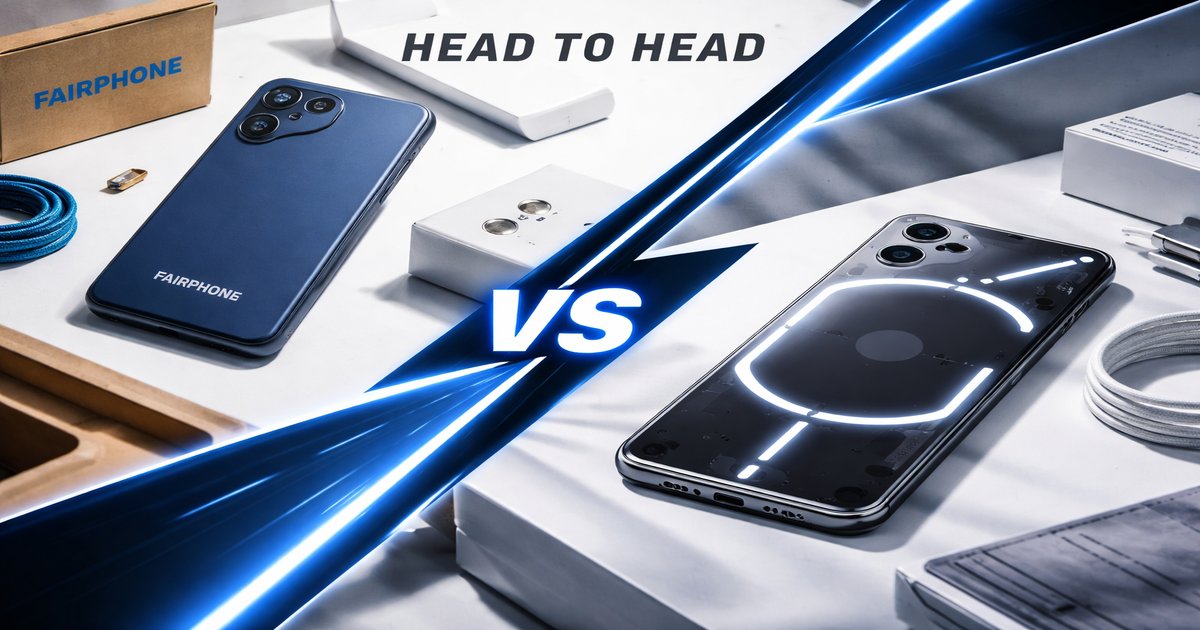
So you’re in the market for a phone that’s more than just its specs—you’re looking for a statement. Whether it’s about sustainability or cutting-edge design, the Fairphone and Nothing Phone offer two distinct visions of what a smartphone should be. But which one deserves your attention and hard-earned cash?
| Specification | Fairphone 4 | Nothing Phone (1) |
|---|---|---|
| Screen Size | 6.3 inches | 6.55 inches |
| Resolution | 2340 x 1080 | 2400 x 1080 |
| Battery Life | 3905 mAh | 4500 mAh |
| Camera Quality | 48 MP main | 50 MP dual |
| Repairability | ✓ | ✗ |
| Wireless Charging | ✗ | ✓ |
✅ fairphone Pros
- Unmatched repairability makes it a sustainable choice.
- Modular design allows easy upgrades and repairs.
- Ethically sourced materials.
❌ fairphone Cons
- Limited performance in high-end gaming.
- No wireless charging.
- Thicker and heavier design compared to competitors.
✅ nothing phone Pros
- Innovative transparent design with LED notifications.
- Solid performance for gaming and multitasking.
- Wireless charging capability.
❌ nothing phone Cons
- Poor repairability and longevity.
- Limited availability of parts and support.
- Gimmicky design might not age well.
Performance
The Fairphone 4 isn’t going to win any awards for speed, but it gets the job done for everyday tasks. Think of it as the reliable workhorse that’s always there for you, albeit without the bells and whistles. On the other hand, the Nothing Phone leans into its performance capabilities. With a Snapdragon 778G+ processor, this phone can handle gaming and multitasking without breaking a sweat. If you’re a heavy user or someone who loves to game on the go, the Nothing Phone is more likely to keep up with your pace.
Build Quality
The Fairphone 4 is built like a tank but has the agility of a Lego set. Its modular components mean you can replace everything from the battery to the screen with a screwdriver and some patience. This is a phone that ages gracefully, thanks to its easy repairability. The Nothing Phone, however, prioritizes aesthetic over function. The transparent back and LED lights make it a fashion statement, but good luck fixing it if something breaks—it’s not designed to be taken apart easily.
Value
When it comes to value, your priorities will dictate your choice. The Fairphone 4 offers long-term value through its sustainability and repairability. It’s a solid investment for anyone who wants to reduce electronic waste. The Nothing Phone gives immediate value in terms of performance and features but might not last you beyond a couple of years without issues. If you’re someone who upgrades frequently and loves having the latest tech, the Nothing Phone might feel like a worthy splurge.
Both phones have hidden catches. The Fairphone’s commitment to sustainability means it’s not the most powerful device on the market, and you’ll feel that if you’re into resource-heavy apps or games. The Nothing Phone, while flashy, has questionable longevity, especially if you’re not gentle with your devices.
Our Final Verdict: Which One Should You Buy?
If you value sustainability and want a phone that’s going to last beyond the next software update, the Fairphone 4 is your match. It’s perfect for eco-conscious users who don’t mind trading cutting-edge performance for a clear conscience. On the flip side, if you crave performance and a design that turns heads, the Nothing Phone is the way to go. It’s ideal for tech enthusiasts who don’t mind the potential trade-off in repairability and longevity.
Will the Fairphone 4 support 5G?
Yes, the Fairphone 4 supports 5G, so you won’t miss out on the latest network speeds.
Can I replace the Nothing Phone’s battery myself?
No, the Nothing Phone is not designed for user-replaceable parts, so you’ll need a professional for battery swaps.
Is the Fairphone 4’s camera good enough for social media?
While it’s not a top-tier camera phone, the Fairphone 4’s 48 MP main camera is more than adequate for social media use.
