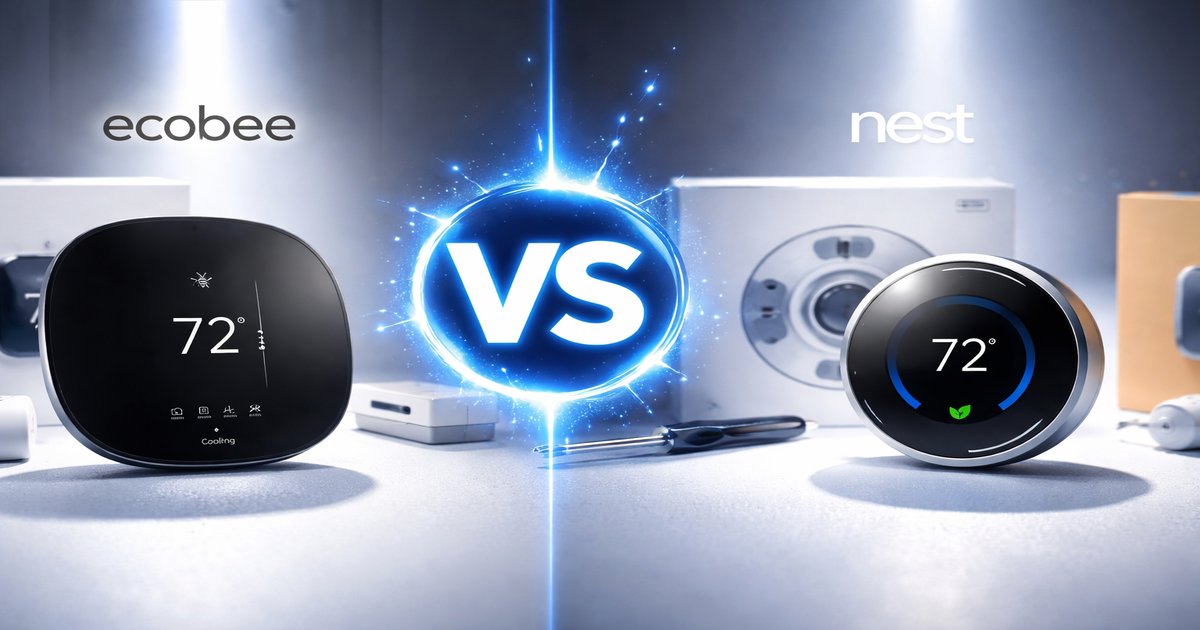
You’re at home, cozy on your couch, but you can’t help but notice it’s a bit chilly. You could get up and adjust the thermostat, but isn’t that what smart devices are for? Enter the ecobee and Nest thermostats—two of the leading contenders in the smart thermostat arena, promising to transform your comfort with the push of a button or a simple voice command.
| Feature | ecobee | Nest |
|---|---|---|
| Smart Assistant Integration | Alexa, Google Assistant, Apple HomeKit | Google Assistant, Alexa |
| Remote Sensors | ✓ | ✓ |
| Energy Savings | 23% | 10-12% |
| Design | Square, Touchscreen | Round, Rotating Dial |
| Price Range | $250-$300 | $130-$250 |
✅ ecobee Pros
- Seamless integration with multiple smart home systems, including Apple HomeKit.
- Superior energy savings, potentially reducing costs by 23%.
- Comes with a built-in Alexa speaker for voice control.
❌ ecobee Cons
- Higher upfront cost compared to some competitors.
- Square design might not fit all home aesthetics.
✅ nest thermostat Pros
- Sleek, modern design with a user-friendly rotating dial.
- Lower initial cost, offering good value for budget-conscious buyers.
- Intuitive learning capabilities that adjust to your schedule.
❌ nest thermostat Cons
- Limited to Google and Alexa for smart assistant support.
- Energy savings are lower compared to ecobee.
Performance
The ecobee thermostat shines in energy efficiency, boasting savings up to 23%, which is a game-changer if you’re looking to cut down on utility bills. Its remote sensors accurately detect room occupancy and temperature, ensuring you’re only heating or cooling areas in use. On the other hand, the Nest thermostat learns your schedule over time and adjusts settings automatically. This feature is fantastic if you prefer a hands-off approach. However, it does take some time to learn your routine, which might be frustrating for those looking for immediate results.
Build Quality
When it comes to build quality, the ecobee’s square touchscreen interface offers a more modern look, but might not blend well with traditional home decors. It’s robust and feels premium, especially with the built-in Alexa speaker. The Nest, with its iconic round design, is a design marvel that blends seamlessly with most interiors. Its rotating dial is not just an aesthetic choice but also provides a tactile interaction, which many find satisfying. Both are durable, but the Nest’s design might edge out in terms of universal appeal.
Value
If upfront cost is your primary concern, the Nest thermostat is the winner with its lower price range. It’s perfect for those who want smart capabilities without breaking the bank. However, if you’re looking at long-term savings and integration flexibility, ecobee justifies its price tag with more robust features and higher energy savings. It might be a bigger initial investment, but the potential savings and convenience can offset the cost over time.
Neither device is a plug-and-play miracle. The ecobee’s advanced features are fantastic but require a bit of setup and learning. Nest’s learning feature is convenient but can be slow if your schedule is irregular. Both systems might need professional installation if you’re not comfortable fiddling with HVAC systems.
Our Final Verdict: Which One Should You Buy?
If you’re an Apple user or someone who wants maximum smart home integration and energy savings, go for the ecobee. It’s perfect for tech enthusiasts who appreciate the finer points of home automation. On the other hand, if you value simplicity, sleek design, and are on a tighter budget, the Nest thermostat is your go-to. It’s ideal for those who prefer a set-it-and-forget-it approach with a modern touch.
Is the ecobee compatible with older HVAC systems?
Yes, the ecobee is designed to work with most 24V systems, but you might need a C-wire or a power extender kit for older setups.
How does Nest’s learning feature work?
Nest uses machine learning to track your adjustments over time and automatically creates a schedule that suits your habits.
Which thermostat has better long-term value?
ecobee offers superior long-term value due to its higher energy savings and broader smart home integration, despite the higher initial cost.
